Welcome to the intracellular galaxy
Tamotsu Yoshimori
PhD. life scientist
All of Arai’s drawings are wonderful. The ‘Galaxy Words’ he draws connect us directly to the universe and remind me of the expanse inside the cell. For us life scientists, the inside of a 10 micrometre (1/100th of a millimetre) cell, too small to see, is the universe. This is not a metaphor, but a complex and elaborate system (society) of vast numbers of miniscule molecules.
Arai expands his consciousness from me → home → region → Japan → cosmos → galaxy → spirit world → heavenly world → world of Kami (fire and water), heaven (source, creator, etc., names differ around the world), but by turning our research consciousness inwards, we can also see the existence of me → organs and tissue → cells → organelles (organs within cells) → supramolecular complex → macromolecules, etc. The organisms come into existence.
When we combine these two, we realise that the universe is connected in every direction and that the human body is just the right size.
Art and science may seem like polar opposites. , but they are in fact one and the same. Both arose from the fundamental human instinct – the intellectual desire to know this universe/world, to understand all that is invisible beneath the surface, to make the unknowable knowable, the invisible visible.
It is said that when people see Arai’s galactic symbols or images, they involuntarily clasp their hands or weep. Despite the lack of any explanation, many people from home and abroad visit the exhibition through social networking services. This kind of healing, which has nothing to do with marketing, probably occurs because Arai makes present “something” that exists in this universe, but which is unknowable and invisible.
Mendel predicted the existence of invisible genes in the 18th century (now confirmed to be real), and mankind actually witnessed the black hole predicted by Einstein’s theory of relativity a hundred years later. Science is also a means of manifesting ‘galactic characters’.
Autophagy, my speciality, is the cell’s internal material-degrading machinery. Cells are gradually broken down by autophagy every day, and the broken down parts are immediately synthesised by another apparatus. In other words, the cell repeats partial death and regeneration, although its appearance remains the same, and in a few tens of days it becomes a completely new cell.
This process keeps cells in a normal state (homeostasis) and humans, which are made up of 37 trillion healthy cells,. If autophagy declines and the replacement of parts stops, cells quickly deteriorate and humans suffer from disease and aging . Autophagy, like Shiva, the god of destruction, is what keeps us alive.
Arai’s paintings resemble cellular renewal by autophagy in that they break down our world-perception, which has become obsolete due to being stuck in a frame, to show us what we have not seen and to elevate our spirit to a new horizon.
Life changes and evolves with great flexibility in order to maintain homeostasis and adapt to the environment at the same time. The dazzling diversity of life is truly a marvel of nature. I feel the same dynamics in Arai’s works. Light and darkness are depicted at the same time, and the dichotomy of light and darkness continues to grow and expand within the viewer. It is neither closed nor complete, but vibrating, transient and dynamic like life, showing the observer, the universe, and shaking the soul.
The process of creating Arai’s paintings is itself similar to the methodology of science. New ideas are born through free discussions and frank exchanges of opinions, free from the confines of common sense, and science is advanced. Arai says that he usually tries to eliminate his ego as much as possible in order to unload images based on his intuition. For this reason, Arai has recently been practising waterfall asceticism and blowing conch shells in the nature of various regions, as if he were an ascetic monk in the monastic tradition.
Arai travels around the world, absorbing the essence of each place, and uses the appropriate materials for each work, such as Japanese paper, digital, acrylic and gold leaf. He uses a variety of materials, such as Japanese paper, digital, acrylic and gold leaf, as if he were a life scientist studying a variety of species, from yeast to human cells, and making full use of various techniques such as MRI and electron microscopy.
Modern science cannot explain why Galaxy Words shake the spirit of the beholder. Just as Jung’s synchronicity – meaningful coincidence – cannot be explained. But, as is often misunderstood, scientists do not deny what science cannot explain.
They neither deny nor affirm, they just say it cannot be explained now. However, we have been able to see that genes and black holes, which are inconceivable to common sense, do indeed exist, thanks to the evolution of technology. We may need to transcend current reductionist science, but one day we will surely be able to know and understand the principles of Galaxy Words.
Tamotsu Yoshimori
Cell biologist. Distinguished Professor in Graduate School of Fronter Biosciences/Medicine, Osaka University. He was awarded a Medal with Purple Ribbon and so on. He has contributed to elucidating the enigma of autophagy as a pioneer in the field together with the Nobel winner Yoshinori Ohsumi.
He shows us the universe through the “Cosmoglyph”.
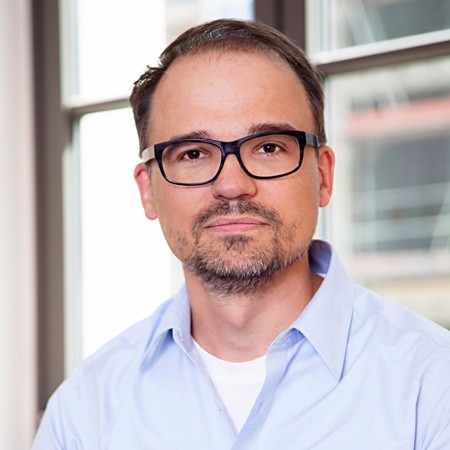
Andreas Kraft
Professor, Berlin University of the Arts
Nowadays, smartphones and IT have permeated society, but I am reminded every day of the importance of physicality. In 2000, I was a part-time lecturer teaching design and programming at the Department of Information Design at Tama Art University in Tokyo. While many students were challenging new possibilities in technology and design, Arai was the only one who stuck to traditional techniques. The faculty, myself included, thought he was missing out on the new possibilities of digital technology.
Today, it is quite the opposite, and his project is “Walking the streets of Tokyo on foot and visualizing the characteristics of each city with symbols and typography”, which is a way of experiencing reality through physical experience. It already showed the importance of rethinking.
The letter collage I used was reminiscent of the 1920s Dada movement in my hometown of Berlin. The letters were a collage of giant black letters and images, redefining the reality in which I was placed. Whether this was a work of intuition, at that time he had already achieved expressions equivalent to those of Robert Rauschenberg and Jasper Johns.
Even now, Arai uses symbols similar to hieroglyphs and typography of ancient characters to examine the current global environment and visualize the layers of meaning that shift to a new era. When he was a student, he only drew symbols carefully on small pieces of paper, but now he creates works on large canvases with bold brushstrokes. Knowing my passion for dance, He could see that the handwriting was not only symbolic of the elements of the image, but also of the movement of how it was painted.
The images are reminiscent of Keith Haring’s drawings, but Arai’s are more metaphysical than pop art. He sees culture from the industrial revolution and even digital as ‘natural’, a way of looking at the world in which consciousness is expanding. Arai’s work is a symbol, through which we can see the times ahead as we travel into space.
Present connects the past to the future.
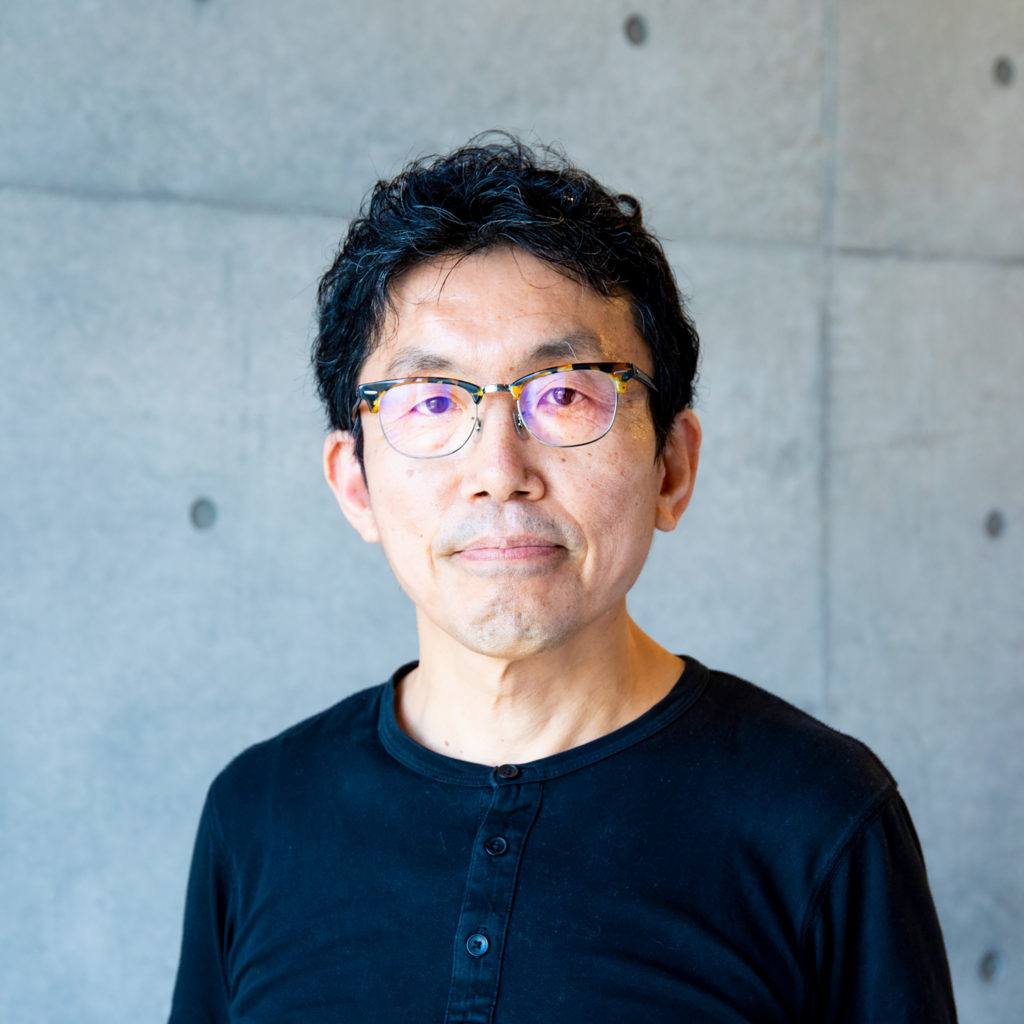
Akihiro Kubota
Professor, Tama Art University
When I first encountered Arai Fuzuki’s “Cosmoglyph,” it reminded me of an ancient set of signs discovered by paleoanthropologist Genevieve von Petzinger. Petzinger focused on graffiti-like “signs,” rather than famous animal drawings, left behind in Ice Age caves 10,000 to 40,000 years ago. She then created a database of geometric signs by collecting more than 5,000 drawings left at 52 archaeological sites and 368 caves. Moreover, she discovered that these signs can be converged into only 32 types of signs.
These signs that mark transitions from gesture or spoken to written language, or from image to language, appear the same in geographically distant places, albeit with some time span. How is it possible that people long ago, without remote communication technologies such as wireless or the Internet, could have such nonlocal simultaneity and continuity, as in modern particle and quantum theory?
Whether art, science, engineering, philosophy, or the humanities, they are all rooted in the environmental and physical, rooted in the state of the earth over the last tens or millions of years and in the basic structure of the human body as shaped by evolution. Even mathematics, the axiomatic system underlying its system, like other everyday languages, emerged from the cognitive activities of us humans, based on embodied experience.
Human sensation, thought, and communication are connected through the human body, including the brain. Linguist George Lakoff and philosopher Mark Johnson have named the abstract and general cognitive schemas extracted from such everyday experiences “image schemas”. Both the geometric signs of Ice Age Europe and the Cosmoglyph of Arai show a deep connection to this image schema. It is the foundation of human communication that shapes society, the foundation of human thought that expands through metaphor, and the foundation of art, the expression of humans, by humans, for humans.
When I look at Arai’s paintings, I see not only the things depicted in them themselves, but also the world or universe to which they may belong, which seems to diverge from them like branches and leaves, or to go back in time. The Cosmoglyph lead to the prehistoric common symbol as the origin of writing. Creating the future and imagining the past are indistinguishable. The past and the future are connected by the present.
Rather than something special, “it” reveals what is overlooked because it is so obvious, what is usually hidden even though we should be aware of it. It is not something transcendental or abstract, but something that all human beings feel and think about. The more individual the experience as a relationship with the object of art, rather than the object itself, the more it is connected to the universe. The existence of each human being is then accepted neither positively nor negatively, but critically and developmentally.
It takes one million years for light to reach the earth from a galaxy. Looking at a galaxy also means looking at the distant past. When we speak of galaxies “close” to Earth, we are referring to galaxies within 11.7 million light-years of Earth. Even the closest galaxy to Earth, the Canis Major Dwarf Galaxy, is about 25,000 light years away. When light was emitted from this galaxy, we are looking at now, mankind began to create a symbol system little by little, and now it is finally beginning to unravel. Indeed, everything is connected. Arai’s galaxy words and the various activities that emerged from them are also part of such a network of universality.
Akihiro Kubota
Professor of Art and Media Course, Department of Information Design, Tama Art University. Received the 66th Japan Media Arts Minister’s Award (Media Arts Division) for the achievements of the “ARTSAT Project”. Publications include “Design for Others” (BNN, Inc., 2017), “Principles of Media Art” (Film Art, Inc., 2018 [Co-Author/Editor]) .